Ph.D. dissertation · Louisiana Tech University
Characterizations of Semi Compact Spaces
August 1983
Ph.D. dissertation · Louisiana Tech University
August 1983
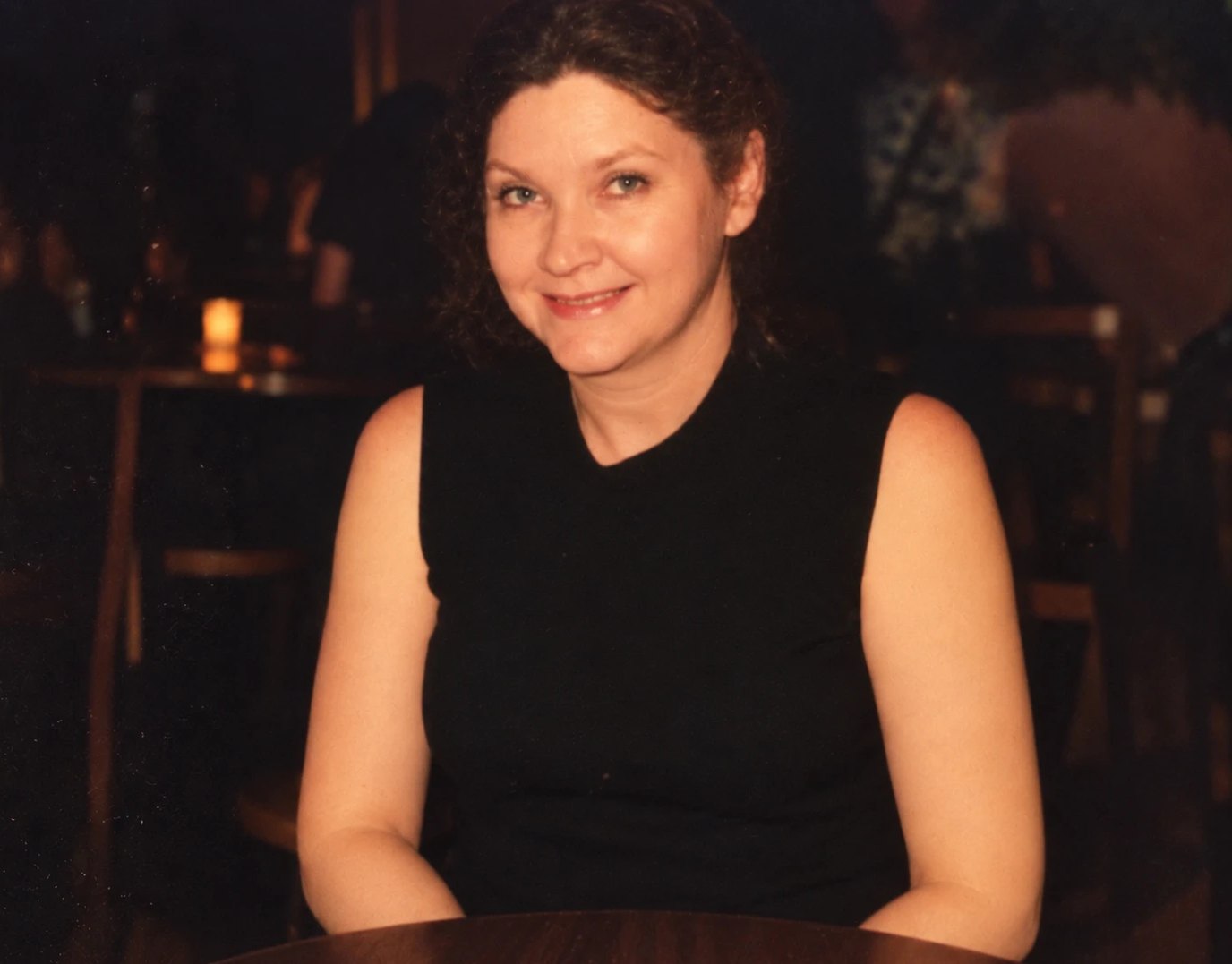
Dr. Francis Ann Dillard Hanna was born and raised in Shreveport, Louisiana, and graduated from Byrd High School. She married her husband, Charles, at nineteen, and they had five children. She finished her bachelor's degree at 28. Then, in September 1967, she walked onto a brand-new campus, LSU-Shreveport, as one of its first 36 faculty members. She taught mathematics there for seventeen years, then at USL in Lafayette until she retired in 1990.
She wrote this dissertation while teaching full time and raising a family. At 46, she earned her doctorate.
Why did it take so long?
She told the campus paper that she had waited for personal reasons and eventually went back because she "wanted to learn more and be a better teacher." She said the research was fun. The exam was nerve-racking.
But I think the more interesting part of her story is that she never really stopped learning. She had wanted to go to medical school when she was young, but her father would not let her. When asked what she might study next, she said maybe computer science or landscape architecture.
She eventually did both.
Outside the university, she was an avid gardener and designed houses and landscapes. She woke up at 4:30 every morning to draw floor plans and work on landscaping projects. Later in life, she fell in love with Sudoku. She did the hardest puzzles, and she did them in a way that was very much her. No scratching out all the possible answers like her granddaughter does. She just worked them out.
In the acknowledgments of her dissertation, she thanked the teacher who introduced her to her first "real" mathematics. The quotation marks are hers. I think they say a lot about how she saw mathematics. It was not simply something she taught. It was something she genuinely loved.
Her final acknowledgment was to the person who helped convince her to begin the doctorate in the first place:
Special appreciation is also extended … to Dr. W. A. Vekovius without whose support the completion of this endeavor might never have been attempted.
I love that she chose the word attempted, not completed.
Because that feels like my grandmother. She kept attempting things. Mathematics. A doctorate. Computer science. Landscape architecture. Houses. Gardens. Sudoku puzzles.
She kept learning.
And this dissertation is one piece of that life.
A brief timeline
A family tree
She thanked Dr. W. E. Koss for teaching her her first "real" mathematics. Real mathematics, in her sense, is not arithmetic and not the formulas in the back of a textbook. It is the kind where you invent the objects yourself, decide what counts, and then find out what must be true. Topology is that kind of mathematics, and in 1983 the corner of it she worked in was new ground.
Topology is the study of what survives stretching and bending, as long as nothing tears. To a topologist these three shapes are the same shape. What matters is not the outline but which points are near which.
In 1963 the topologist Norman Levine asked what would happen if open sets were allowed to take in part of their own boundary. He called such sets semi open, and wrote the idea in one line:
Decoding the formula
Read together: A is squeezed between an open set and that same set with its rim on. So A is the open set plus any part of the rim you like, from none of it to all of it. The glowing disc at the top of this page is one: the inside, plus the solid part of the edge, but not the dashed part.
Her advisor, Charles Dorsett, then called a space semi compact when every cover of it by semi open sets can be cut down to a finite cover. That is a much stronger demand than ordinary compactness, and nobody yet knew which spaces could meet it. Her dissertation answers that question completely.
Semi compactness turns out to force a space to be very nearly finite. She showed that every semi compact space is built from just three kinds of piece. Think of a garden bed: loose seeds, a leaf full of seeds, and leaves joined on one stem.
Type 1A finite space.
Type 2Infinite, and every nonempty open set misses only finitely many points.
Type 3Connected: finitely many type 2 pieces, joined by finitely many points.
A space is semi compact exactly when it is one of these types, or a finite side-by-side collection of them. Along the way she found eleven equivalent ways to say a space is semi compact, including these:
She ended the dissertation with a quiet, confident claim: that her theorems describe semi compact spaces completely. The classification bears her out.
The full dissertation is 28 pages, typed, as microfilmed by University Microfilms International in 1983.
Read the dissertationThe year after, she and her advisor published the results together: Hanna, F. and Dorsett, C., "Semi compactness," Questions and Answers in General Topology 2 (1984), 38–47.
The repository also has a plain-language guide to the theorems and some Python for exploring semi open sets on small spaces.
Hanna, Francis Ann Dillard. Characterizations of Semi Compact Spaces. Ph.D. dissertation, Louisiana Tech University, 1983.
Other mathematicians have built on her results ever since. Most cite the journal version she and Dorsett published in 1984; one cites the dissertation itself.
Lagniappe (lan-yap): a Louisiana word for a little something extra, given for free. From Louisiana French, by way of the Spanish la ñapa and the Quechua yapay, to add. This chapter is the extra: a letter, and the stories.
Lagniappe (se dice lan-yap): palabra de Luisiana para un pequeño extra que se regala. Del francés de Luisiana, pasando por el español la ñapa y el quechua yapay, añadir. Este capítulo es el extra: una carta, y las historias.
Long before the dissertation there were letters. This one went to her sister Rose, the great aunt in the album above, on a Wednesday in July. It is written on onion skin paper, and she knew exactly what Rose would notice first.
Stories, told by those who knew her.
Talk story (Hawaiʻi): to sit and chat, catch up, trade stories. Hawaiian Pidgin, grown from the Hawaiian moʻolelo, storytelling, and from plantation-era neighbors swapping tales.